Business fit
Architecture starts with the capabilities, service levels, and decisions the business needs to make—not a list of services.

Cloud and platform architecture
A cloud estate becomes valuable when teams can release, secure, observe, and improve it with confidence. Tao Mgt joins business architecture, Azure engineering, data, integration, and service ownership into one practical design conversation.
The result is a clearer path from current state to target state, with decisions documented well enough to survive changing priorities and changing teams.
Explore solution architectureThe architecture conversation
Architecture starts with the capabilities, service levels, and decisions the business needs to make—not a list of services.
Design for failure, recovery, observability, and the operational ownership needed after the project team leaves.
Make identity, access, data boundaries, secrets, and evidence part of the architecture rather than an end-stage review.
Use cost visibility and sensible platform guardrails to keep cloud decisions connected to value over time.
What the work can leave behind
The best architecture work makes the next decision simpler. We leave behind a usable set of patterns, ownership agreements, and working practices—not only diagrams.
Read about responsible operations →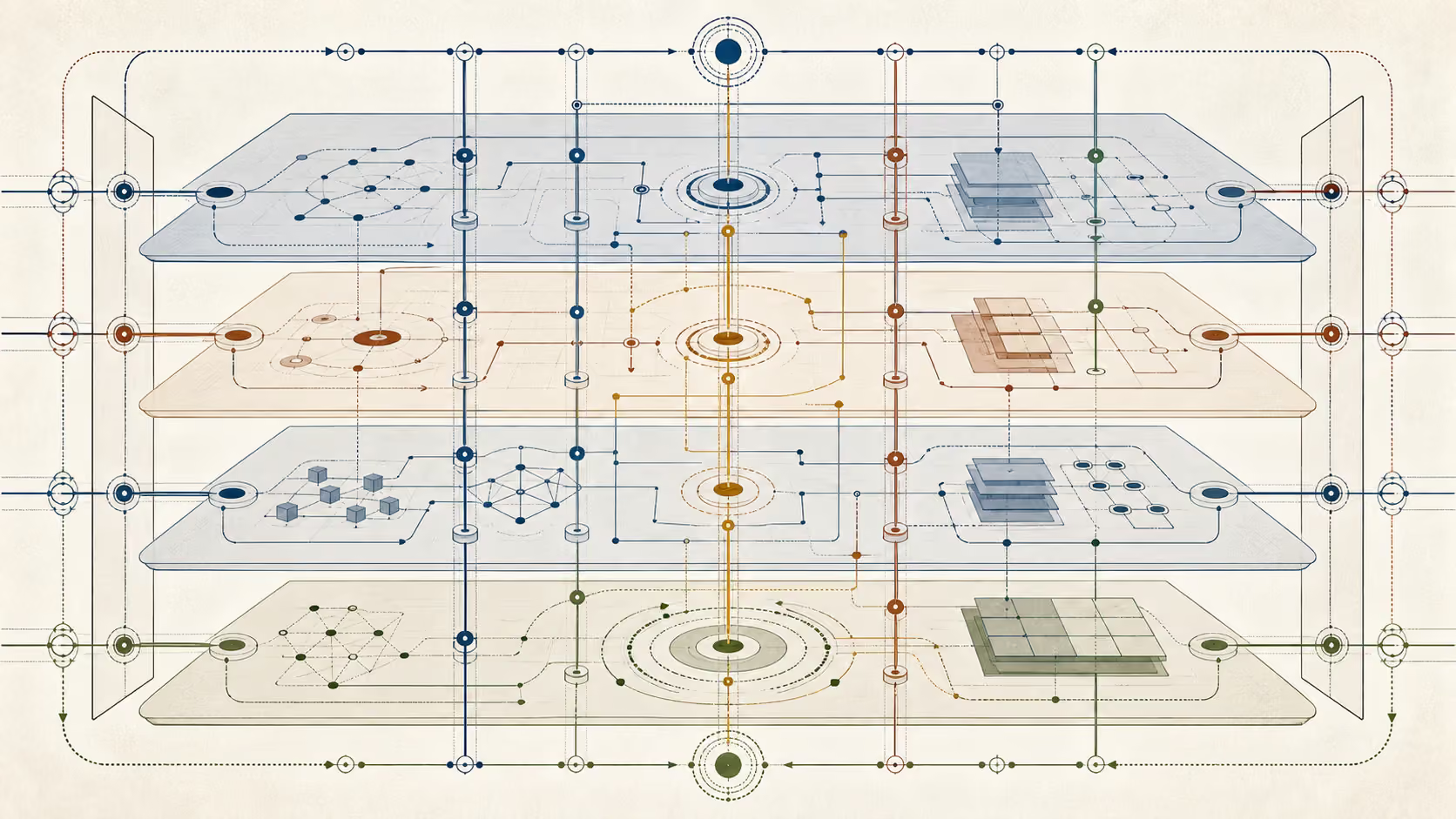
Architecture at the boundary
Reference architecture becomes useful when people can operate the interfaces, recover from failure, and understand what the platform is asking of them.

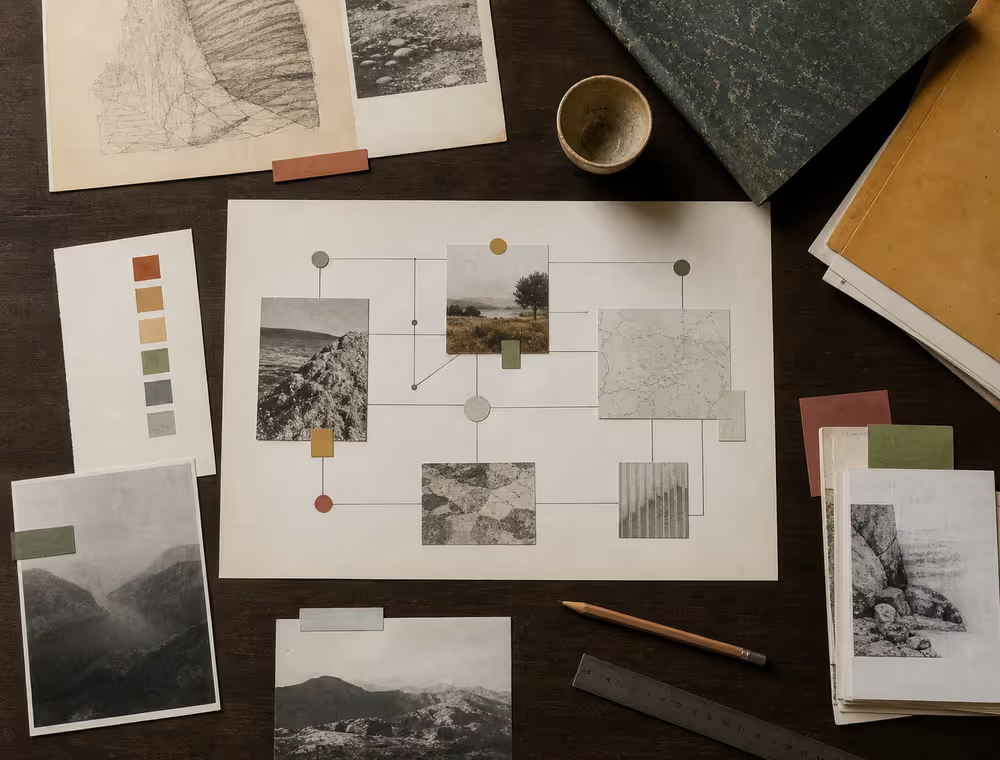
Architecture earns trust at the boundary: interfaces, identity, observability, recovery, ownership, and the practical decisions people make when the happy path ends.
What does the architecture assume a tired operator will know during the failure it was designed to survive?
Connect architecture to the core1Name the failure condition that matters.
2Trace the signal, owner, decision, and recovery path.
3Make the operating evidence readable to the people who will use it.
Read the solution brief