Readiness
Make the current condition visible before the program asks people to absorb another change.
- ↗Change impact map
- ↗Readiness signals
- ↗Capacity and dependency view
The people side is the operating side
A platform can be configured, a process can be approved, and a strategy can be announced while the organization continues to perform the old pattern. Tao Mgt connects readiness, role transition, solution design, leadership attention, and reinforcement so useful change can become normal work.
The adoption loop
Change becomes durable when the organization can see the reason for the move, perform the new behavior, recover from uncertainty, and return learning to the design.
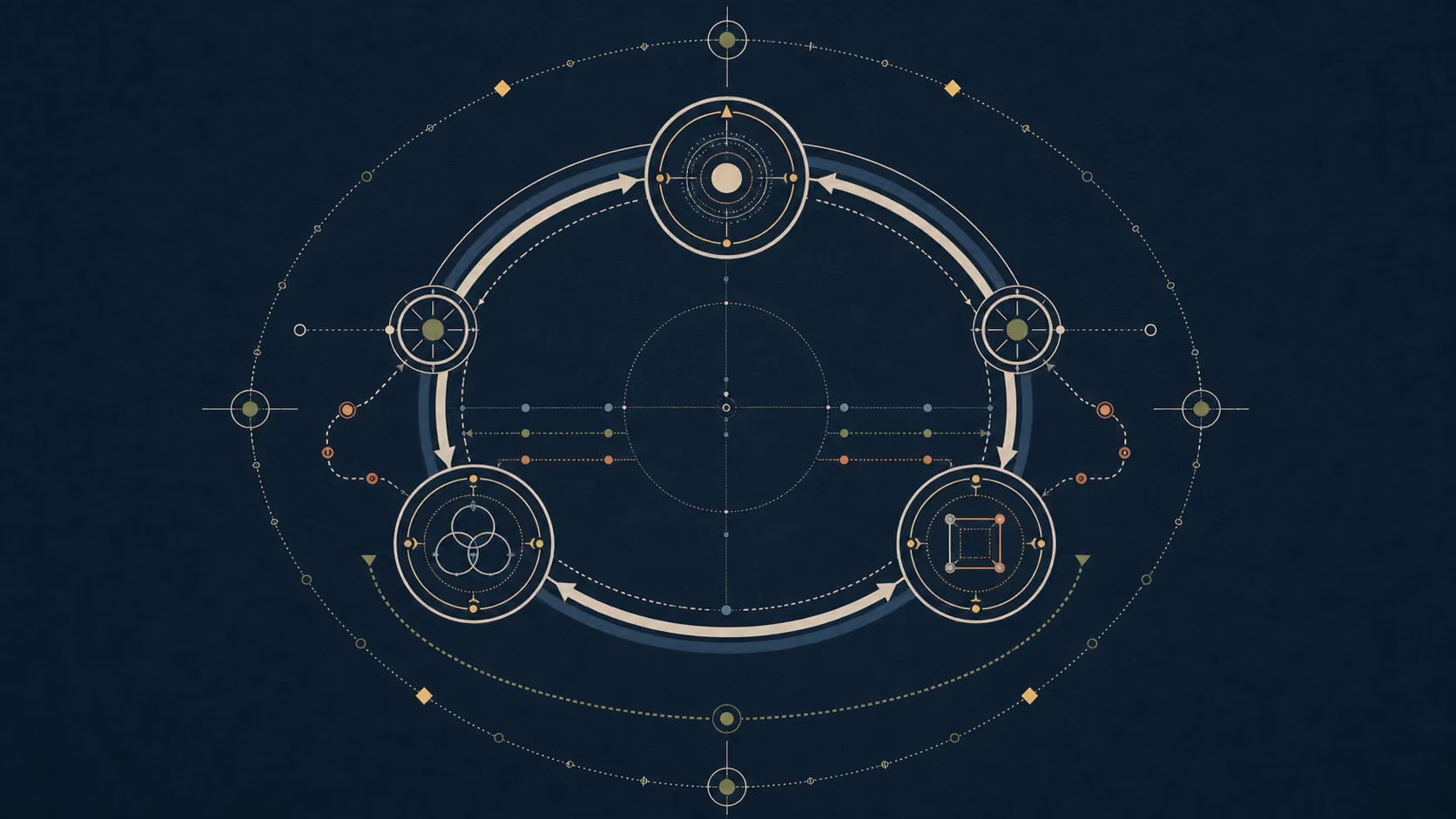
Three connected disciplines
Make the current condition visible before the program asks people to absorb another change.
Translate the future process, decision rights, and system behavior into role-specific practice.
Keep the new way of working alive through measures, management routines, feedback, and deliberate correction.
A practical test
A training event cannot repair an unclear role, a missing data field, a contradictory measure, or a workflow that makes the desired behavior impossible.
Can the people affected explain what is changing, why it matters, and what remains stable?
Do roles, policies, decision rights, and incentives allow the desired behavior?
Can people perform the new work under ordinary pressure, including exceptions?
Can the organization notice drift, correct the condition, and learn without blame?
A transition you can govern
The sequence is not a waterfall. Teams move between the steps as evidence changes, but the order protects the work from jumping straight to communications or training.
Describe the business promise, the behavior that must change, and the cost of leaving the condition alone.
Trace the change through roles, decisions, workflows, platforms, measures, and local adaptations.
Give each affected group a useful story, a workable practice, a clear owner, and a safe way to ask for help.
Use a representative value stream to learn whether the future design works for the people who carry it.
Turn learning into standards, management attention, measures, and a deliberate next improvement.
Useful before the program starts
Use the diagnostic to identify whether the next move is a readiness conversation, an operating-model decision, a solution boundary, or a governed AI path.
Open the change diagnostic ↗Adoption is evidence about the design of the work. When people cannot sustain the intended behavior, look for the missing authority, context, workflow, measure, or recovery path before asking for more enthusiasm.
Which part of the desired behavior is the system still making unreasonable?
Name the decision or customer promise the change is meant to improve.
Trace the role, data, policy, and platform conditions around that decision.
Give the team a way to surface exceptions and return learning to the design.