Autonomous work
Agents will handle more routine coordination. The enterprise advantage will belong to organizations that make judgment, escalation, and accountability explicit.
Tao Mgt / Horizon 2066
Organizations that last another forty years will not be optimized for a single cycle. They will be designed to learn, absorb new forms of work, and keep human judgment close to consequences.
Tao Mgt has spent more than two decades helping businesses make change real. The next generation asks for a longer promise: systems that remain useful as the world changes around them.
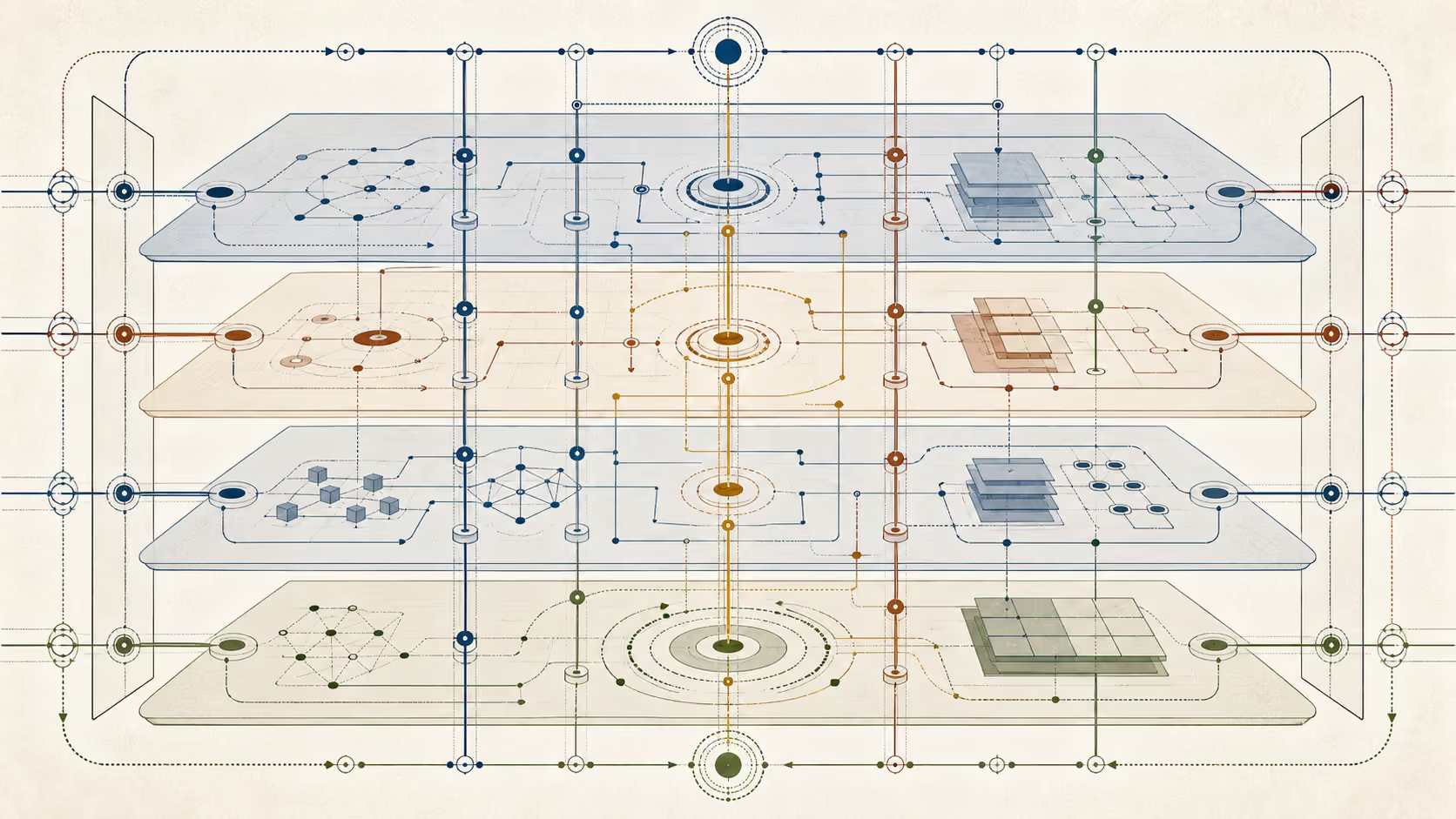
The future is not a forecast to defend. It is a set of conditions to prepare for: more capable machines, tighter ecological limits, more distributed decisions, and a higher premium on trust.

A longer design horizon
Resilience is not a department. It is the quality of the relationships between the parts.
What we are preparing for
Each signal changes what an enterprise needs from its people, platforms, and governance. The useful response is not certainty; it is a stronger ability to sense, decide, and adapt.
Agents will handle more routine coordination. The enterprise advantage will belong to organizations that make judgment, escalation, and accountability explicit.
Climate, energy, water, logistics, and public trust will become operating constraints—not separate sustainability language around the edge of the business.
The scarce resource will not be information. It will be attention, craft, and the ability to learn together across generations, markets, and machines.
Global companies will need one shared direction with more local sensing, faster feedback, and permission for the edge to improve the center.
Regulation, privacy, security, and reputation will move at the speed of deployment. Governance must live inside the product and the process.
Customers, employees, and partners will choose systems they can understand, challenge, and rely on when the conditions change.
Practices worth carrying forward
The language comes from many places, but the test is enterprise-native: does the practice help people make a better decision, build a more reliable capability, or leave the system stronger than they found it?
Small, owned improvements that make the next operating cycle stronger.
Go to where value is created; let the work correct the story.
Bring affected voices into consequential decisions early enough to improve the decision.
Reflect without theater. Learn from the gap between intent and result.
Create enough quiet and distance for leaders to perceive the system, not only react to its alerts.
Treat the making of a product, platform, or service as a craft with standards, pride, and responsibility.
A broad industrial inheritance
We learn from the Tao Te Ching's patience, from Taichi Ohno's attention to muda, mura, and muri, and from the Toyota Production System's insistence that flow and quality belong together. We also respect the broader industrial traditions associated with Mitsubishi and Hyundai: build capability, think in generations, and make scale answer to craft.
We are an American enterprise practice. The work is not imitation. It is a deliberate synthesis: local accountability, global standards, clear architecture, and a willingness to improve the system every day.
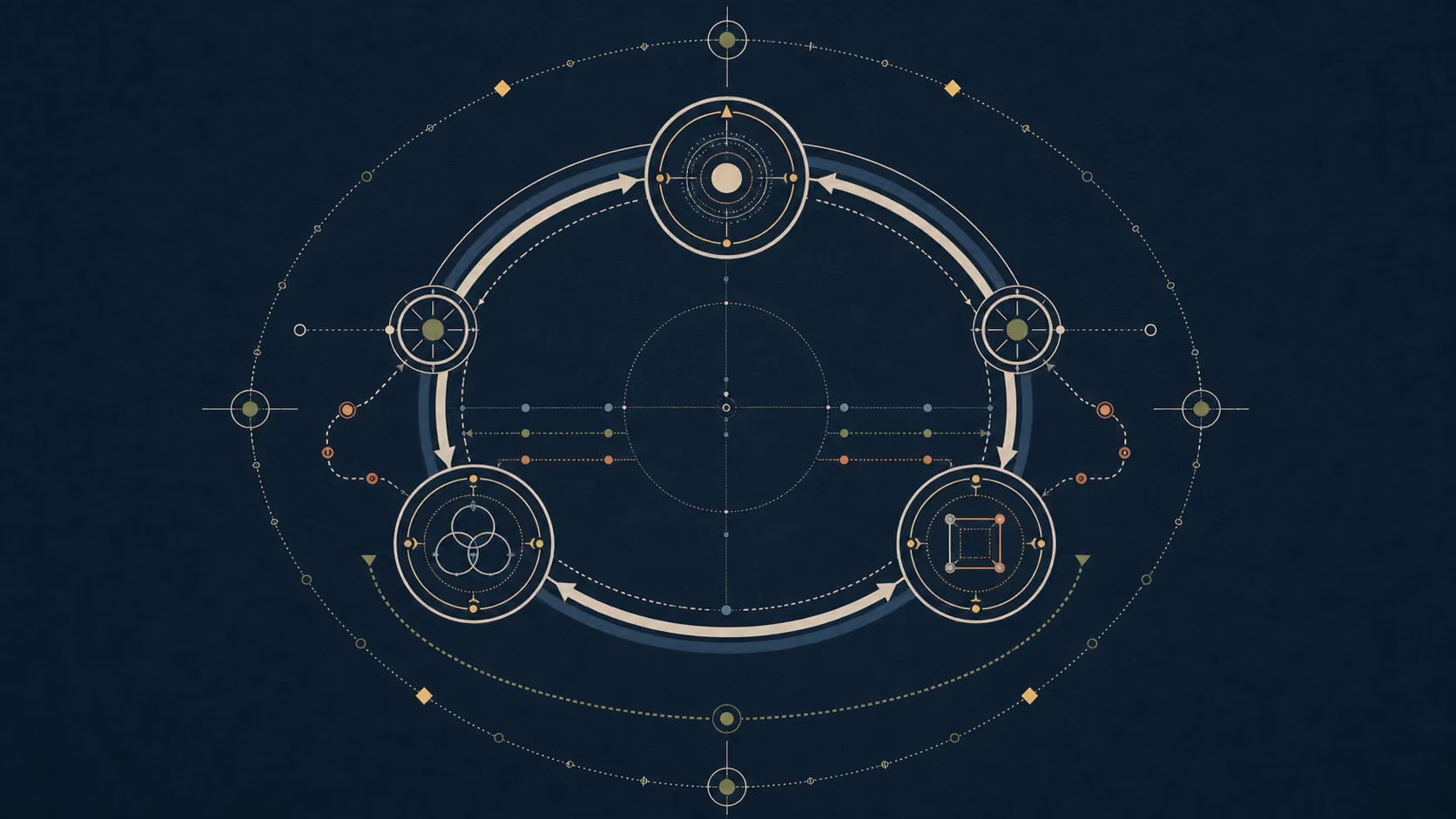
Conditions worth designing for
The long view becomes practical when it changes the way a team designs a platform, a capability, or a decision right today.


What we commit to
Design architectures and operating models that can absorb new tools, new regulation, and new forms of work without forcing a full restart.
A transformation should leave behind better questions, clearer measures, and people who can improve the next version without waiting for permission.
The further technology reaches into decisions, the more important it becomes to show who owns the outcome and how the system can be stopped.
A durable capability may look slower in the first quarter. Over decades, it compounds through trust, resilience, and the quality of the decisions it makes possible.
If the next forty years matter to your organization, the next useful move deserves more than a short-term fix.
Start the long conversationA forward-looking organization does not only ask what is possible. It asks what it can responsibly operate, learn, govern, and change after the excitement of the first release.
Ask yourselfWhich future capability would be unsafe to scale before its learning loop exists?