New York / Tokyo / Global
A connected practice
Near enough to listen. Wide enough to see the system.
Tao Mgt works with organizations whose work does not stop at the edge of one office, one market, or one time zone.
Our location model pairs local attention with a shared operating language—so the enterprise can move together without pretending every market works the same way.
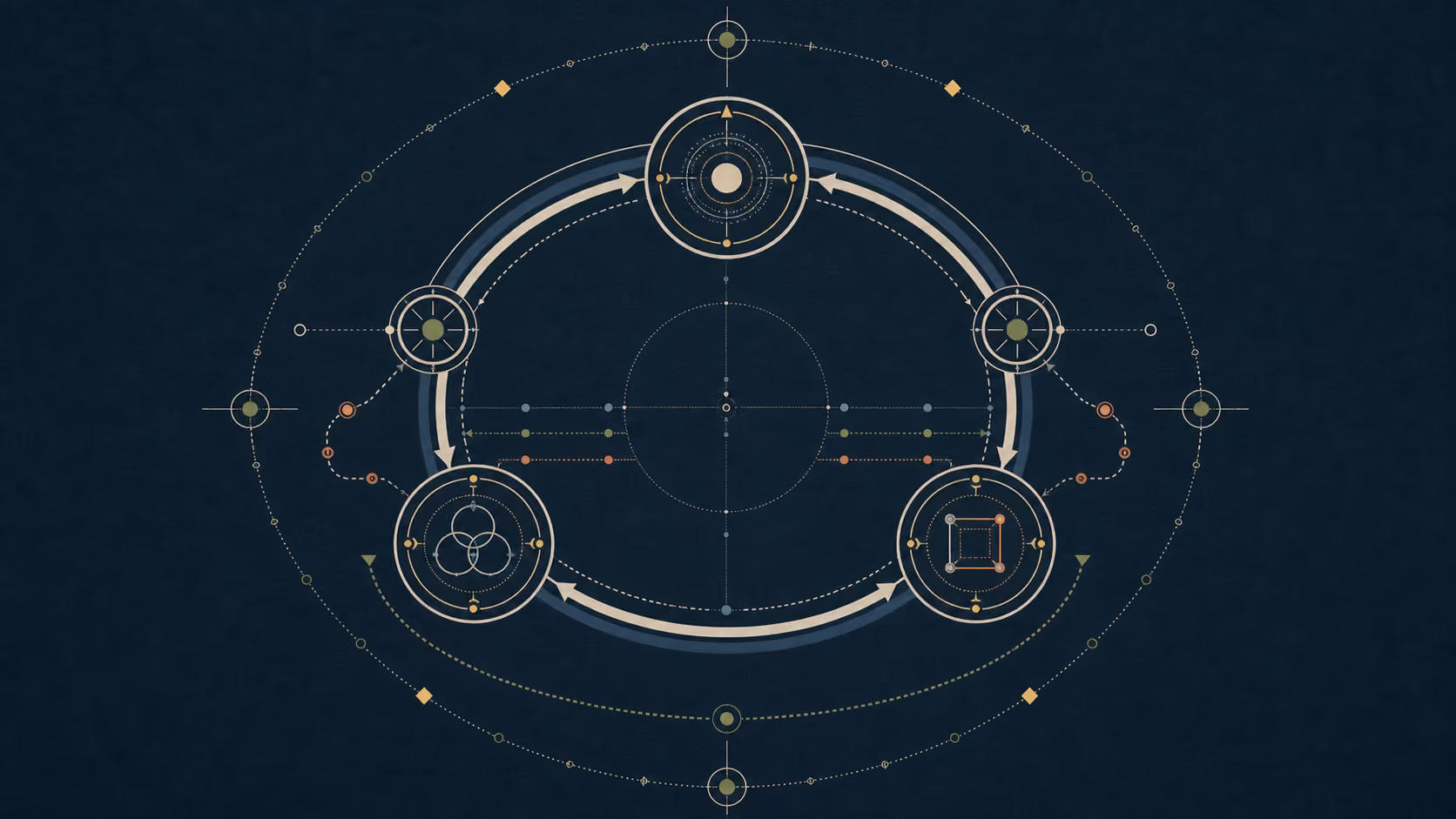
The operating question
What should be shared globally—and what should stay close to the customer?
Three views of the work
A global footprint with human scale.
Global headquarters
New York
A close partner for leadership teams making operating decisions, funding transformation, and coordinating the enterprise.
Explore the practice →Asia-Pacific bridge
Tokyo
A perspective shaped by practice from Japan and work across markets, where local intelligence matters as much as global consistency.
Explore the practice →Distributed by design
Global
A practical model for the handoffs, time zones, standards, and local decisions that make international operations work.
Explore the practice →Local attention, shared language
Distance changes the texture of a decision. The work is to keep the enterprise coherent without flattening the intelligence held by each place.


For international operators
Consistency without centralization for its own sake.
The core
Shared definitions, controls, architectural principles, and measures that give leaders a common view.
The local
Market knowledge, regulatory requirements, customer context, and the judgment that cannot be designed from headquarters.
The handoff
Clear ownership across time zones, with documentation and cadences that make the next team stronger.
The measure
A small set of outcomes that show whether the operating model is helping the business rather than simply producing activity.
Find the Way.
Let's talk.
A global operating model is a way for local learning to travel without losing its meaning.
New York, Tokyo, and global work are not interchangeable backdrops. They reveal different relationships between density, precision, timing, trust, and adaptation.
What should be shared across locations, and what would become weaker if it were standardized?
Question worth carrying forward
- Name the enterprise promise.
- Name the local knowledge that protects it.
- Design the interface where shared direction meets local judgment.