Practice note / continuous improvement
Small improvements. Serious compounding.
Kaizen is often translated as “continuous improvement,” but the useful part is more specific: improve the work by involving the people who do it, then make the improvement visible and repeatable.
In practice, that can mean reducing the time between a sales order and a shipped product, removing duplicate compliance work, or giving a service team one trusted view of a customer.
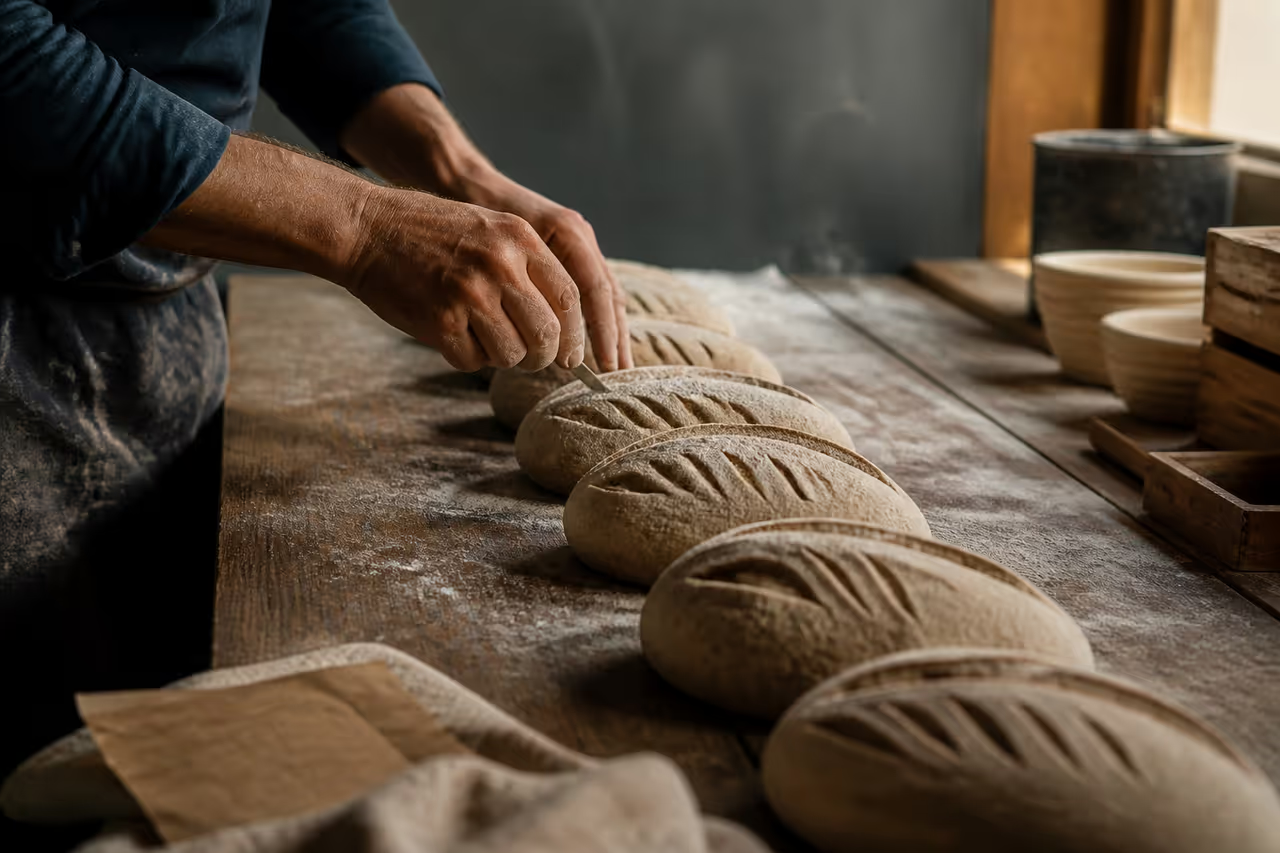
The goal is not to make people work harder. It is to make good work easier to repeat.
What makes it real
Kaizen is a management practice, not a suggestion box.
Large transformations create energy, but the operating system is shaped between the steering committee meetings. Kaizen gives the team a safe, structured way to surface friction and make progress without waiting for the next major program.
It works especially well when the improvement is close to the work, the test is small enough to run quickly, and the measure is visible to the team. The leader’s job is to protect the experiment, remove blockers, and make learning part of the normal cadence.
Ohno’s language of muda, mura, and muri is useful here: look for waste, unevenness, and overburden together. Then use hansei—a disciplined reflection on what the system taught you—to improve the next cycle.
The conditions
Three signals that an improvement can stick.
A measurable friction
A recurring delay, rework loop, handoff failure, or avoidable escalation.
A named owner
Someone close to the work who can test the change and see whether it helps.
A short cycle
A small experiment that can be tried, measured, and adjusted before the next operating review.
A practical operating cadence
Put improvement where decisions already happen.
Teams surface abnormalities and protect the standard for the work in front of them.
Owners review one or two measures, test a change, and close the loop with the people affected.
Leaders remove cross-functional constraints and decide which local learning deserves to become a shared standard.
The portfolio is rebalanced: keep, scale, stop, or redesign based on evidence rather than enthusiasm.
A useful first move
Choose one value stream.
Start with the work that matters to a customer and trace it end to end. Name where it waits, where information is re-entered, and where a decision is unclear. Then ask the team closest to that friction what they would change first.
Tao Mgt helps leaders turn that first improvement into a practical system for ERP, service operations, architecture, and AI adoption.
Next: learn how Gemba makes the work visible →