Field guide / observation
Go to where the work becomes real.
Gemba is the place where value is created. In a factory, it might be a production line. In software, healthcare, or financial services, it may be a service desk, a claims queue, a CRM workflow, a control room, or the meeting where a decision stalls.
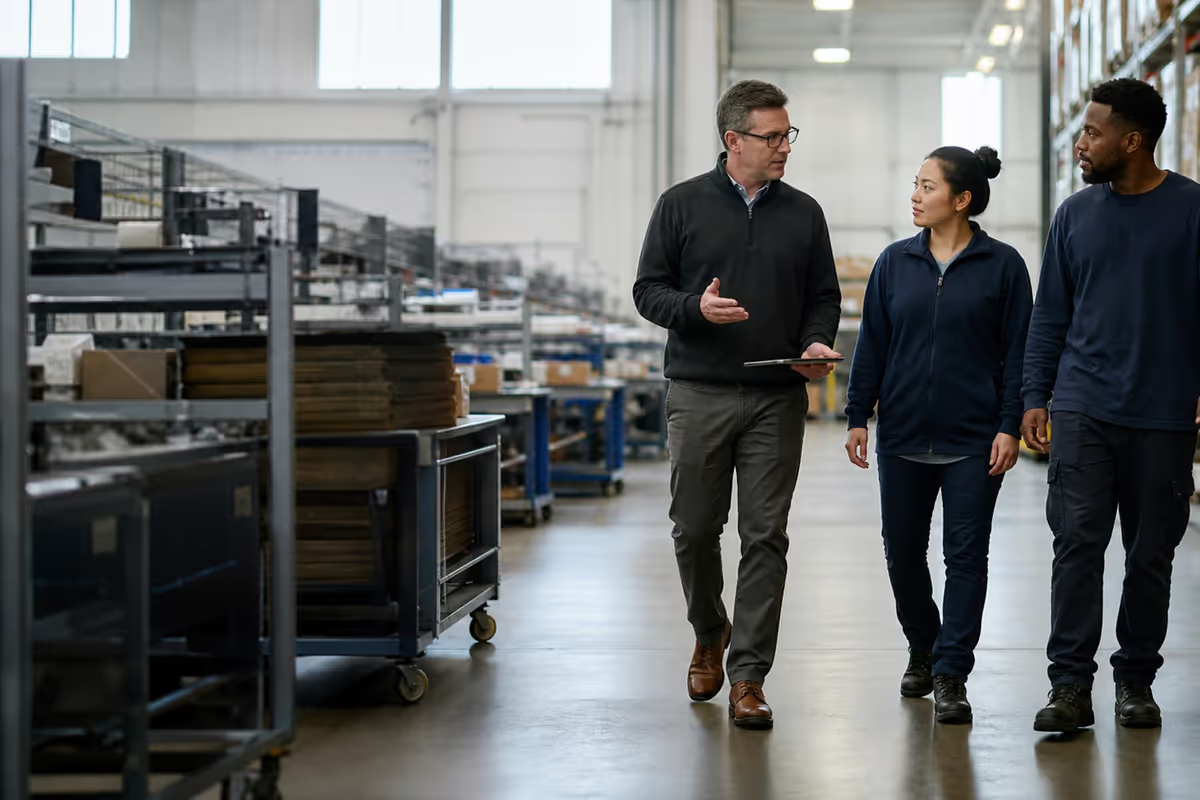
A Gemba walk is a disciplined act of attention. It helps leaders see the system as it is experienced—not as it was designed in a slide deck. Genchi genbutsu is the compact reminder: go and see for yourself.
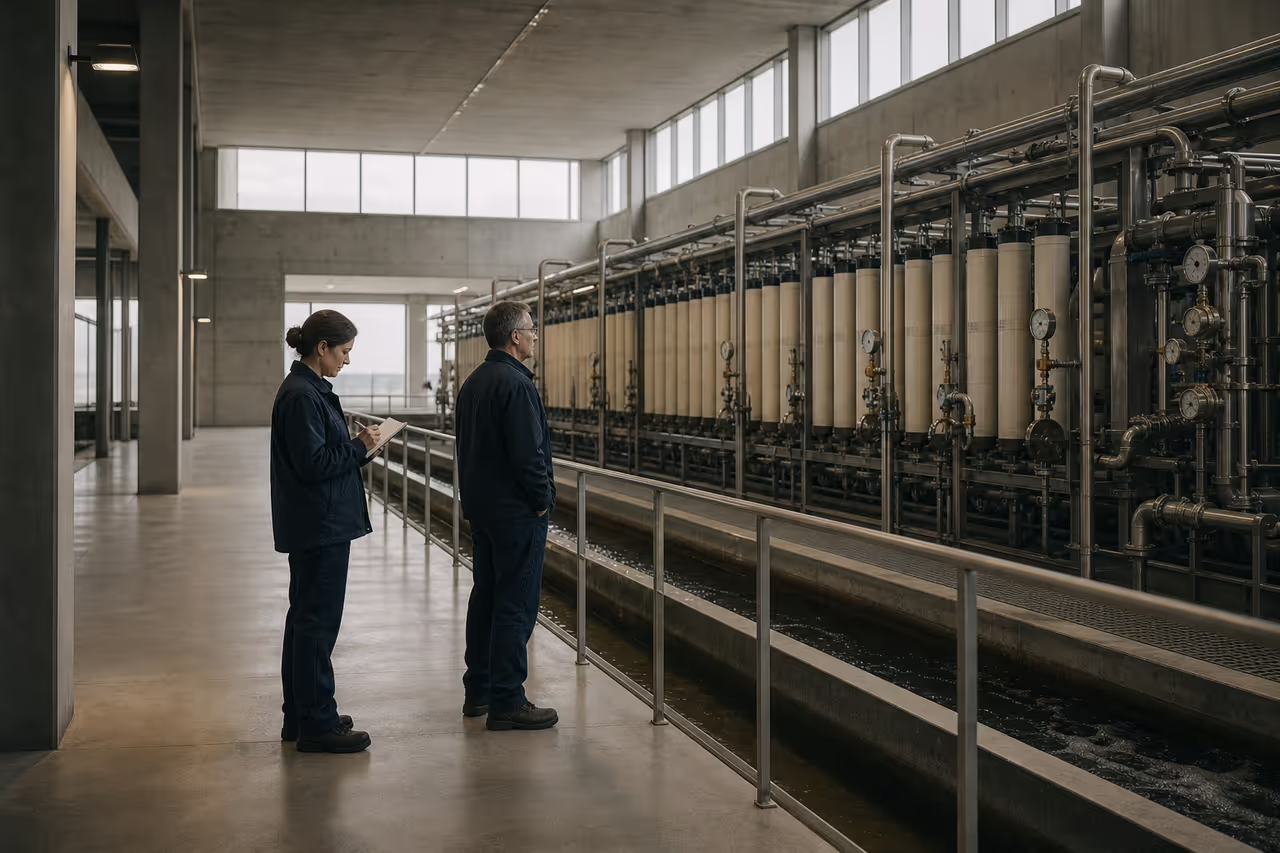
The posture matters
Never audit the person for a problem created by the system.
Observation without theater
The walk is for learning, not proving.
When leaders arrive with a pre-written answer, people protect themselves and the system becomes invisible. When leaders arrive with a real question, teams can show the workarounds, manual controls, and hidden decisions that keep the business moving.
The best question is often simple: “Can you walk me through the last time this happened?” It moves the conversation from opinion to sequence, from blame to cause, and from a local complaint to a system that can be improved.
A good Gemba walk ends with a clearer next experiment—not a longer list of observations.
A repeatable practice
Four moves for a useful walk.
Prepare
Know the outcome you are trying to understand. Bring a question, not a verdict.
Observe
Watch the work where it happens, including the handoffs, tools, queues, and workarounds.
Ask
Invite the person doing the work to explain what makes the job easy, hard, slow, or risky.
Close
Thank the team, record what you learned, and return with a small action that proves you listened.
Distributed Gemba
The work may be remote. The observation cannot be abstract.
For teams spread across New York, Tokyo, and other markets, a Gemba walk may be a screen-share through a workflow, a day listening to a support queue, a visit to a customer-facing site, or a facilitated review of the last five cases.
Use real records, real timestamps, and real handoffs. Include the people who carry the work across time zones. Then turn the learning into an owner, a measure, and a date to look again.
Next: connect local observations to the whole system →